

NFL overtime rules: Football is one of the most thrilling sports in the world because of its unpredictable nature. Every snap can change the momentum of the game, and sometimes, four quarters just aren’t enough to determine a winner. That’s when overtime steps in. For decades, NFL overtime rules have been the subject of heated debates among fans, players, coaches, and analysts. Why? Because a single rule about possession or scoring can determine whether a team advances in the playoffs or goes home devastated.
Overtime rules are particularly important in the NFL because unlike other sports, football doesn’t offer as many scoring opportunities in a short timeframe. A possession in football is highly valuable, and losing the coin toss has often felt like losing the game. Imagine sitting through 60 minutes of gridiron warfare, only for a coin flip to dictate who gets the ball first and possibly the win. That sense of unfairness has pushed the NFL to reevaluate its overtime system multiple times.
Over the years, the league has experimented with sudden death, adjusted scoring conditions, and added time limitations. Each change was meant to make overtime fairer while also keeping games exciting and player safety in mind. The latest shift came in 2025, when the NFL implemented a new set of rules that significantly changed how overtime is played, especially in the regular season.
So, why should fans care about these rules? Because understanding them can completely change how you watch a close game. You’ll know exactly what each coach is trying to accomplish, why certain play calls are made, and when a strategy is brilliant or risky. The overtime rules aren’t just technicalities they shape the drama that makes football unforgettable.
The 2025 Rule Change Explained
The 2025 season introduced one of the most important overtime changes in NFL history. For the first time ever, the league decided to guarantee both teams a possession in overtime during the regular season, no matter what happens on the opening drive.
Before this change, overtime in the regular season worked like this: if the team receiving the opening kickoff scored a touchdown, the game ended immediately. Fans hated it because it gave a huge advantage to the team that won the coin toss. Defenses were often exhausted by the end of regulation, making it difficult to stop a fresh offensive drive in overtime.
The new 2025 rule fixes that. Now, if the first team scores a touchdown, the second team still gets the ball and has a chance to respond. If both teams score touchdowns, the game moves into a sudden-death scenario where the next score of any kind wins. If the first team fails to score at all, the second team has the opportunity to end the game with just a field goal.
So, what’s the difference compared to pre-2025 rules?
- Old Rule: First possession touchdown ends the game.
- New Rule (2025): Both teams get a possession, regardless of the first possession outcome.
Why did the NFL decide to change it? Two main reasons: fairness and fan pressure. The league faced backlash after multiple high-profile playoff games where star quarterbacks never got a chance to touch the ball in overtime. Fans wanted to see both teams’ offenses on the field, not have games end without one side’s best players getting a chance.
Commissioner Roger Goodell and team owners agreed that football needed to be more balanced in these crucial moments. The rule aims to put the pressure back on both sides of the ball offense and defense while giving fans the satisfaction of seeing both teams fight for the win.
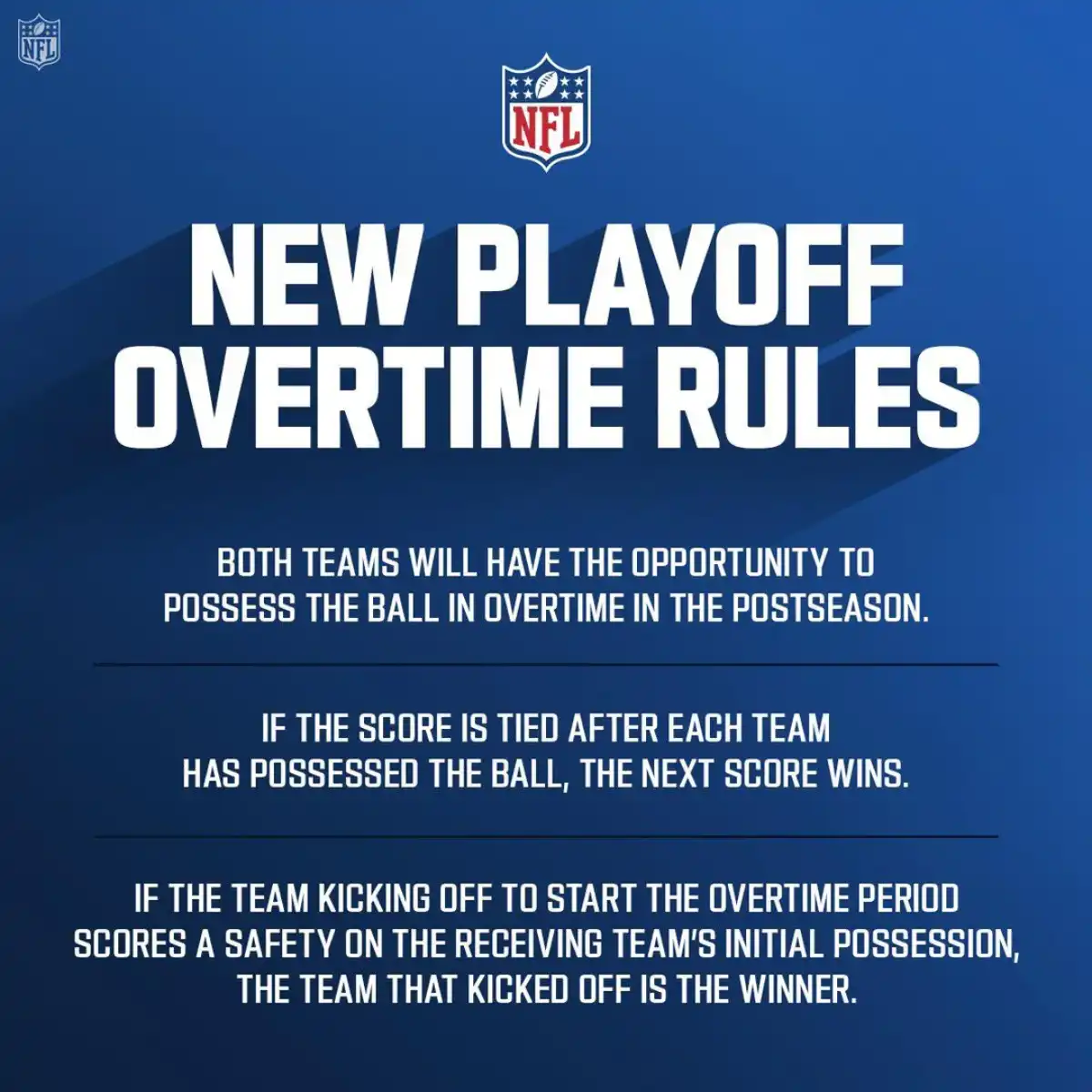
This change might seem small on paper, but in practice, it reshapes how coaches call plays and how players approach every overtime snap. It’s not just about scoring anymore; it’s about matching your opponent, adapting under pressure, and sometimes taking calculated risks that wouldn’t have been considered under the old rules.
Regular Season Overtime Rules in 2025
Now let’s break down exactly how regular season overtime works under the 2025 rules. These rules ensure clarity and fairness while also keeping games from dragging on endlessly.
The Coin Toss and Starting Possession
At the end of regulation, if the game is tied, a coin toss determines who gets the ball first. The visiting team captain calls heads or tails, and the winner of the toss decides whether to receive, kick, or choose which goal to defend. This moment sets the tone for overtime, and while it still matters, it’s less decisive than it used to be. In the past, winning the toss almost guaranteed an edge. Now, it only gives the first crack at scoring.
Game Clock and Time Management
Overtime in the regular season lasts 10 minutes. That’s shorter than the standard 15-minute quarter in regulation and much shorter than playoff overtime, which can extend indefinitely. Coaches must manage the clock carefully. Long, methodical drives can eat away most of the overtime period, leaving little time for the opposing team’s possession. But now that both sides are guaranteed a possession, burning the clock isn’t as powerful a weapon as before.
Scoring Rules and Winning Conditions
Here’s how a regular season overtime can unfold:
- Team A receives kickoff and scores a touchdown. Under old rules, game over. But in 2025, Team B gets a chance to match or beat it.
- If Team B also scores a touchdown, the game continues into sudden death next score wins.
- If Team B fails to score (turnover, missed field goal, punt, or stopped on downs), Team A wins.
- If Team A kicks a field goal instead of scoring a touchdown, then Team B can win with a touchdown or tie with a field goal.
- If both teams fail to score during their possessions, the next score of any kind ends the game.
Tie Game Scenarios
Unlike the playoffs, regular season games can still end in a tie. If neither team scores during the 10-minute overtime, or if both teams still remain tied after their guaranteed possessions, the game ends as a tie. While ties are rare, they can significantly impact playoff standings, so fans should watch closely when a game is heading in that direction.
This balance between fairness and time limitation is the NFL’s way of keeping games competitive while not exhausting players during a long season.
Postseason (Playoff) Overtime Rules in 2025
The postseason is a completely different beast. Ties are not an option someone has to win. Because of this, playoff overtime is structured for endurance, drama, and finality.
How Playoff Overtime Differs from Regular Season
In the playoffs, both teams are also guaranteed a possession regardless of what happens on the first drive. This aligns the playoff format with the new regular season rule, making things consistent across the board. However, the big difference is in the game length and continuation.
Multiple Overtime Periods Explained
Each overtime period in the playoffs lasts 15 minutes, just like a standard quarter. If the score is still tied after both teams have had a possession, the game moves into sudden death. If neither team wins after 15 minutes, they simply keep playing additional overtime periods until someone finally scores. There’s no limit to how many overtime periods can be played the game continues until there’s a winner.
Timeout Rules and Strategy Adjustments
Each team gets three timeouts per half in postseason play, which means those timeouts carry over into overtime periods. Coaches often save timeouts for late-game strategy in overtime, especially when planning crucial field goal attempts.
This longer and open-ended overtime format creates incredibly tense playoff matchups, where every snap could be the one that decides a season’s fate. Think of it as football’s version of extra innings in baseball only with far higher stakes and physical intensity.
Strategic Implications of the New Overtime Rules
The 2025 overtime changes aren’t just cosmetic they dramatically alter how teams approach late-game situations. Coaches now have to think several moves ahead, knowing their opponent is guaranteed a possession.
One major impact is on offensive play-calling. In the old system, teams receiving the opening kickoff were aggressive, aiming for a touchdown to end the game immediately. Now, coaches might play more balanced, knowing they’ll need to match or outscore their opponent’s possession.
On the defensive side, teams may focus more on preventing touchdowns rather than forcing a complete stop. Allowing a field goal isn’t as devastating anymore, since it still gives their offense a chance to win.
Special teams also become more important under this system. A poor kickoff, missed field goal, or botched punt in overtime can swing the entire game. With both teams guaranteed a possession, field position takes on even greater value.
The bottom line? The 2025 overtime rules create a chess match where both coaches know they’ll get a chance to make their move. It’s no longer about who gets lucky on the coin toss it’s about who executes under pressure.
Historical Context of NFL Overtime
To really understand why the 2025 rule change matters, you need to know where NFL overtime came from and how it evolved. Overtime hasn’t always been part of pro football. For decades, tied games were simply left as ties, and fans had to accept that sometimes there wouldn’t be a winner. This changed in 1974, when the NFL introduced the sudden-death overtime system. The rule was simple: the first team to score wins.
At the time, it was revolutionary. Suddenly, there was a clear path to determining a winner without dragging the game out indefinitely. But the system wasn’t perfect. A coin toss decided which team got the first chance to score, and in a sport where possessions are scarce, this gave a massive advantage to the receiving team. By the late 2000s, fans, players, and even team owners started calling for adjustments.
That’s when the NFL introduced its first major overtime tweak in 2010. Instead of sudden death on any score, the new rule stated that if the team receiving the ball first kicked a field goal, the other team would get a chance to possess the ball. However, if that first possession ended in a touchdown, the game was still over. This was meant to balance fairness with efficiency.
In 2017, the league reduced the length of regular-season overtime from 15 minutes to 10. This was a direct response to concerns about player safety. Coaches and trainers worried that long overtime periods led to fatigue and higher risks of injury, especially in games played on short rest.
Then came the 2022 postseason rule change, which guaranteed both teams a possession in playoff games. This came after the infamous Bills vs. Chiefs 2021 AFC Divisional Game, where Josh Allen never got a chance to touch the ball in overtime. Fans were outraged, and the league responded quickly.
Fast forward to 2025, and the NFL finally decided to extend that same guarantee to regular-season games. This shows the league’s willingness to evolve, balancing tradition with fairness, safety, and fan satisfaction. Overtime has never been static it has always reflected the way football itself continues to adapt.
Notable Games That Shaped Overtime Rule Changes
Overtime rules don’t just change in a vacuum. They change because of memorable games that exposed flaws in the system. If you look back at NFL history, you’ll see that some of the most dramatic contests are the reason we have the 2025 format today.
One of the earliest examples was the 1971 AFC Divisional Game between the Kansas City Chiefs and the Miami Dolphins. This game lasted double overtime and remains the longest in NFL history, clocking in at over 82 minutes. The exhausting nature of the game showed just how brutal endless sudden death could be on players.
Then there’s the 2010 NFC Championship Game between the Minnesota Vikings and the New Orleans Saints. Brett Favre and the Vikings never got a chance to respond after the Saints won the coin toss and kicked a field goal. This game played a huge role in pushing the league to adjust the rule so a field goal on the first drive wasn’t enough to end things.
The most famous example, though, is probably the 2021 AFC Divisional Playoff between the Buffalo Bills and Kansas City Chiefs. In what is widely considered one of the greatest games of all time, Josh Allen threw four touchdowns and put up 42 points. Yet in overtime, the Bills lost the coin toss, Patrick Mahomes marched down the field, and the Chiefs scored a touchdown to end it. Allen never touched the ball again. The outrage from fans and analysts was so loud that the NFL had no choice but to guarantee both teams a possession in playoff games starting in 2022.
Finally, regular-season ties like the 2018 Browns vs. Steelers 21–21 draw showed the quirks of the 10-minute overtime rule. These ties became sticking points in playoff seeding and raised questions about whether ties should even exist in football.
Each of these games legendary in their own right left a mark on NFL history. Without them, the league might not have taken the steps that eventually led to the 2025 overhaul.
Comparing NFL Overtime to Other Sports
Football isn’t the only sport that wrestles with how to break ties, but it’s one of the most controversial. Comparing NFL overtime to other leagues and sports makes it clear just how unique the system is.
Take college football, for example. The NCAA doesn’t use timed overtime. Instead, each team starts at the opponent’s 25-yard line and takes turns trying to score. If the game is still tied after both possessions, they keep going until one team has the advantage. It’s almost like a shootout in soccer or hockey high drama, but very different from the NFL. Starting so close to the end zone also means almost guaranteed scoring, which many fans see as more exciting.
In soccer, overtime is limited to two extra periods, and if the game is still tied, it often comes down to penalty kicks. Critics argue that shootouts feel unfair, as they reduce a full team sport to a battle between a kicker and a goalie. Still, fans accept it because of soccer’s global traditions.
Basketball uses a straightforward method: keep playing until there’s a winner. Each overtime is the same length as a regular quarter, and the game continues until the tie is broken. There’s no sudden death element, and no one complains because basketball naturally has more scoring opportunities.
The NFL sits somewhere in the middle. Its overtime rules try to balance fairness with practicality. It doesn’t want endless games like basketball or the near-certainty of scoring like college football. Instead, it’s designed to maintain the tension of every possession while also protecting players from excessive playing time.
When you compare them side by side, you realize that football’s overtime is less about tradition and more about compromise. It’s constantly evolving, and 2025 is just the latest chapter in that story.
Pros and Cons of the 2025 NFL Overtime Rule
Like any rule change, the 2025 update has sparked plenty of debate. Some fans and analysts love it, while others argue it creates new problems. Let’s break down the major pros and cons.
Pros
- Fairness – Both teams get the ball, so no one can complain about losing purely because of a coin toss.
- Excitement – Fans get to see both offenses in action, which makes games more thrilling to watch.
- Consistency – Playoff and regular-season overtime rules now align, making the system easier to understand.
- Balanced Strategy – Coaches can’t just rely on scoring first; they must think about how the opponent will respond.
Cons
- Player Safety – More guaranteed possessions mean potentially longer games, raising fatigue and injury risks.
- Ties Still Exist – Regular-season games can still end in a tie, which frustrates fans who want clear winners.
- Scheduling Challenges – Longer games could impact TV schedules, travel, and even short-week matchups.
- Defensive Pressure – Some argue it unfairly shifts more responsibility onto defenses that are already worn down by four quarters of play.
Overall, the pros outweigh the cons, at least from a fan’s perspective. But player safety remains the NFL’s number-one concern, and it’s likely this debate will continue in the coming years.
The Role of Player Safety in Overtime Rules
When it comes to any NFL rule change, player safety is always front and center. Football is one of the most physically demanding sports in the world, and by the time players reach overtime, they’ve already endured 60 minutes of hard-hitting action. Adding more possessions, more plays, and more minutes on the field naturally raises concerns about injuries.
This is why the league has historically tried to balance fairness with health risks. For example, when the NFL reduced regular-season overtime from 15 minutes to 10 minutes in 2017, it wasn’t just about speeding up the game for TV broadcasts. It was primarily about reducing the risk of fatigue-related injuries. Players who are exhausted are more prone to making mistakes and in football, mistakes can mean serious injuries like concussions, torn ligaments, or broken bones.
The 2025 rule change, which guarantees both teams a possession, raises the question: does this make overtime longer and therefore more dangerous? Technically, yes. If both teams score on their first drives, there are more plays, more hits, and more chances for injuries. However, the league argues that the 10-minute cap in the regular season still keeps things relatively controlled. Unlike the playoffs, where games must continue until someone wins, regular-season games have a clear cutoff to prevent excessive wear and tear.
Another aspect of player safety is special teams play. Kickoffs, punts, and returns are some of the most dangerous plays in football. Overtime almost always involves a kickoff, and possibly more if the game extends with multiple possessions. To address this, the NFL has continuously adjusted kickoff rules from moving the ball forward to reduce returns, to experimenting with formations that minimize high-speed collisions.
In short, the NFL’s overtime system is a balancing act. Fans want fairness, players want safety, and the league wants to protect both while still delivering excitement. The 2025 rule is the league’s attempt at threading that needle: giving both teams a chance without creating marathon games that leave players battered for weeks afterward.
How Overtime Affects Playoff Seeding and Records
Overtime doesn’t just decide who wins a single game it can alter the entire playoff picture. In the regular season, ties are rare but impactful. Because the NFL standings are based on winning percentage, a tie doesn’t count as a win or a loss. Instead, it sits in the middle. This might sound harmless, but it can make or break playoff seeding.
For example, imagine a team finishes the season at 9–7–1 (nine wins, seven losses, one tie). Another team in the same division finishes 10–8. The 9–7–1 team actually has a better winning percentage than the 10–8 team, because the tie is “half a win.” That single overtime result can decide who goes to the postseason and who stays home.
This is why regular-season overtime rules matter so much. Coaches often face tough decisions: should they play aggressively in overtime to secure a win, or play conservatively and risk a tie? For playoff hopefuls, even a tie can sometimes be enough to sneak into the postseason.
In the playoffs, of course, ties aren’t possible. Overtime games in January and February often become legendary, precisely because they’re win-or-go-home. Just look at how the 2018 AFC Championship (Patriots vs. Chiefs) or the 2022 Divisional Round (Bills vs. Chiefs) changed the narrative of entire seasons. A single overtime possession can decide legacies, Super Bowl appearances, and even coaching careers.
That’s why the 2025 rule change is so significant. By ensuring both teams get a possession, the league has reduced the chance that one team’s playoff hopes are crushed without their offense even touching the ball. It keeps the postseason more competitive and helps ensure that the best team not just the luckiest coin toss winner advances.
Fan Reactions to the 2025 Rule Change
NFL fans are some of the most passionate in all of sports, and whenever the league changes a rule, opinions fly fast and loud. The 2025 overtime change has been no exception.
On social media, the response has been largely positive. Fans have long complained about games being decided without one team’s offense ever seeing the field. The change feels fairer and more exciting, giving fans more football in the moments that matter most. Memes and highlight reels flooded Twitter and Instagram as soon as the rule was announced, with many fans joking that “Josh Allen finally got justice” after the infamous 2021 playoff game.
Analysts and former players also chimed in. Some praised the move as overdue, pointing out that football is ultimately about competition and competition means giving both sides a chance. Others, however, raised concerns about player fatigue, especially during the long grind of the regular season.
There’s also the question of ties. Many fans hate them, arguing that every NFL game should have a clear winner. Others say ties add unique drama, creating playoff races where every half-game matters. Still, it’s undeniable that most fans would prefer to see a winner crowned every Sunday.
Overall, the 2025 rule has been welcomed as a step forward. It doesn’t solve every issue ties remain, and player safety is still a concern but it addresses the biggest complaint fans have had for years: fairness. And in a league where fan engagement drives everything from TV ratings to merchandise sales, that’s a win for the NFL.
Future of NFL Overtime
The NFL is never afraid to experiment, and overtime rules could change again in the future. The league often tests new ideas in the preseason, at college levels, or even in the XFL/USFL to see how they might work in the pros. So, what might the future of overtime look like?
One possibility is adopting a college-style system, where each team starts at the 25-yard line. This would guarantee excitement and quick results, but critics argue it doesn’t feel like “real football” since it removes kickoffs, punts, and field position strategy.
Another idea floated by some analysts is a “spot and choose” system: one team picks the yard line where the ball will start, and the other team chooses whether to play offense or defense. This would add a layer of strategy and fairness, eliminating the coin toss advantage.
The NFL might also revisit the issue of ties in the regular season. Fans may push for games to always have a winner, even if it means extending overtime slightly. If TV scheduling and player safety concerns can be managed, eliminating ties could be the next big change.
Finally, technology and data analytics could play a role. The league constantly monitors injury trends, player workloads, and game flow. If the numbers show that overtime under the 2025 rules leads to significant risks, another adjustment could be on the horizon.
For now, though, the NFL seems committed to this system. It’s fairer, it keeps fans engaged, and it maintains the integrity of competition. But if history has taught us anything, it’s that NFL overtime will never stop evolving.
Tips for Fans Watching Overtime Games
If you’re watching an NFL game that heads into overtime, here are a few tips to help you follow the drama more closely:
- Pay attention to the coin toss. While less decisive now, it still gives the first team an edge in setting the pace.
- Watch the clock. With only 10 minutes in regular-season OT, long drives can leave little time for the opponent’s response.
- Understand the scoring dynamics. A field goal on the first drive doesn’t end the game anymore, but it does put pressure on the second team.
- Notice defensive adjustments. Overtime defenses often focus on preventing big plays, even if it means allowing smaller gains.
- Keep an eye on special teams. A missed field goal, poor punt, or long return can swing overtime instantly.
By knowing the rules and strategies, you’ll enjoy the overtime experience even more instead of waiting for the announcers to explain what’s happening, you’ll already understand the stakes.
Conclusion
The 2025 NFL overtime rule change represents one of the most significant shifts in the league’s history. By guaranteeing both teams a possession, the NFL has made the game fairer, more competitive, and more exciting for fans. While player safety and ties remain topics of debate, the change has been largely embraced as a positive step forward.
Overtime has always been one of football’s most dramatic stages, where games and sometimes entire seasons hang in the balance. With these new rules, fans can expect even more edge-of-your-seat moments, where strategy, execution, and resilience matter more than the luck of a coin flip.
FAQs on NFL Overtime Rules 2025
1. What is the biggest change in NFL overtime rules for 2025?
The most important change is that both teams are guaranteed at least one possession in overtime during the regular season. Under the old rule, if the team receiving the opening kickoff scored a touchdown, the game ended immediately. Now, even if the first team scores a touchdown, the second team will still get the ball and a chance to match or beat the score. This update was made to create a fairer and more balanced system, addressing years of complaints that the coin toss unfairly determined the winner.
2. Can NFL regular-season games still end in a tie under the new rules?
Yes. Despite the new rule, regular-season games can still end in a tie. Overtime lasts only 10 minutes in the regular season. If neither team has more points at the end of that period, the game officially ends in a tie. While ties are rare, they can significantly affect playoff seeding since they count as “half a win” in the standings.
3. How long does overtime last in the regular season?
Overtime periods in the regular season last 10 minutes. This is shorter than the standard 15-minute quarters in regulation. The NFL reduced it from 15 to 10 minutes in 2017 to limit player fatigue and reduce injury risks. If the clock runs out during overtime without a winner, the game ends in a tie.
4. How does playoff overtime work in 2025?
Playoff overtime rules are different because postseason games cannot end in ties. Each overtime period is 15 minutes, and if both teams remain tied after their guaranteed possessions, the game continues into additional overtime periods. This can go on indefinitely until one team wins. Unlike the regular season, there is no clock limit playoff games must produce a winner.
5. What happens if the first team scores a touchdown in overtime?
In 2025, if the first team scores a touchdown on its opening possession, the game does not end immediately. The opposing team gets the ball and must score a touchdown to keep the game alive. If they only score a field goal, the first team wins. If they match with a touchdown, overtime moves into sudden-death rules, where the next score of any kind wins.
6. What if the first team only scores a field goal in overtime?
If the first team kicks a field goal on the opening drive, the second team can:
- Win with a touchdown
- Tie with a field goal
If the second team ties the game with a field goal, then the game continues under sudden-death rules. This rule encourages aggressive playcalling, since settling for a field goal could leave the door wide open for the opponent.
7. Can a game end on the first possession of overtime?
Yes, but only in rare circumstances. The only way a game can end on the first possession is if the kicking team scores a safety against the receiving team. For example, if the receiving team fumbles in their own end zone and the defense recovers, the game ends immediately.
8. Who gets to call the coin toss in overtime?
In overtime, the visiting team captain calls the coin toss. The winner of the toss chooses whether to receive, kick, or select which goal to defend. While this still matters, the coin toss is less decisive than in the past since both teams are guaranteed a possession.
9. How many timeouts does each team get in overtime?
- Regular season: Each team receives two timeouts during the 10-minute overtime.
- Postseason: Each team receives three timeouts per half, which includes overtime periods. This allows for more strategy and clock management in extended playoff games.
10. Are coaches allowed to challenge plays in overtime?
No. Just like in the final two minutes of each half in regulation, coaches cannot challenge plays in overtime. All reviews come from the replay booth and are initiated by the officials. This helps speed up the game and ensures consistent oversight during critical moments.
11. Why did the NFL change the overtime rule in 2025?
The change was made primarily for fairness and fan satisfaction. High-profile games, such as the 2021 AFC Divisional matchup between the Bills and Chiefs, sparked outrage because one quarterback (Josh Allen) never got to touch the ball in overtime. Fans demanded a rule where both offenses had a chance, and the NFL responded by extending the guaranteed possession rule from playoff games to regular-season games.
12. What happens if both teams score touchdowns on their first possessions?
If both teams score touchdowns, the game does not end. Instead, overtime shifts into sudden death, where the next score of any kind touchdown, field goal, or safety wins the game. This ensures both teams have had a fair opportunity before moving into a decisive phase.
13. What role does player safety play in overtime rules?
Player safety is one of the main reasons regular-season overtime is capped at 10 minutes. The league knows that additional minutes mean more plays, more collisions, and more fatigue-related injuries. While the new rule ensures fairness, it also tries to limit risk by restricting regular-season overtime length. In the playoffs, safety concerns take a back seat because games must produce a winner.
14. Can ties impact playoff seeding?
Absolutely. Ties can act as “half a win” in the standings, which sometimes benefits teams in tight playoff races. For example, a team with a record of 9–7–1 has a better winning percentage than a team with 10–8, meaning the tie could actually help in playoff qualification. This makes overtime results incredibly important, even if they don’t end in a win.
15. Do overtime rules affect betting and fantasy football?
Yes. Overtime can dramatically affect both betting spreads and fantasy football scoring. A last-minute overtime touchdown might swing a point spread, moneyline, or over/under bet. In fantasy leagues, extra plays in overtime mean more chances for yards, receptions, and touchdowns which can be the difference between winning or losing your matchup.
16. How does NFL overtime compare to college football overtime?
College football overtime is much different. Each team starts with the ball at the opponent’s 25-yard line and has a chance to score. If both teams remain tied, the process repeats. After the second overtime, teams must attempt two-point conversions instead of kicking extra points. The system guarantees plenty of scoring but feels less like traditional football since it eliminates kickoffs and punts.
17. How do other sports handle overtime?
Other sports use very different methods:
- NBA: 5-minute overtime periods until a winner is determined.
- Soccer: Two extra periods followed by penalty kicks if still tied.
- Hockey: 3-on-3 sudden-death overtime, then shootouts in the regular season; continuous sudden-death periods in the playoffs.
Compared to these, NFL overtime is unique in combining sudden death with guaranteed possessions.
18. Could the NFL eliminate ties in the future?
It’s possible. Many fans dislike ties, arguing that every game should have a clear winner. Eliminating ties would likely mean extending overtime periods or adopting a college-style system. However, the league has been cautious, balancing fairness with player safety. Unless fan pressure grows stronger, ties are likely to remain in the regular season.
19. What strategies do coaches use in overtime under the new rules?
Coaches now must think ahead, knowing the opponent will also get the ball. Strategies often include:
- Being aggressive to score touchdowns instead of settling for field goals.
- Conserving timeouts for defensive stops or last-second field goal attempts.
- Playing field position carefully, since a short field could decide the game after both possessions.
The new rules turn overtime into a chess match where both offense and defense matter equally.
20. Which teams might benefit most from the 2025 overtime rules?
Teams with elite quarterbacks and high-powered offenses benefit the most, since they’re guaranteed a possession no matter what happens. In the old system, a team with a great defense but weaker offense could sometimes win simply by winning the toss. Now, offensive balance is more important. Franchises like the Chiefs, Bills, Bengals, and other teams with explosive passing attacks stand to gain the most.
NFL overtime rules 2025, new NFL overtime rules, NFL overtime explained, NFL overtime 2025 changes, NFL overtime coin toss, NFL overtime sudden death, NFL regular season overtime rules, NFL playoff overtime rules, NFL overtime tie rules, how does NFL overtime work, NFL overtime format 2025, NFL OT rules update, history of NFL overtime rules, NFL overtime fairness debate, NFL overtime coin toss advantage, NFL overtime controversy, Josh Allen overtime rule, Patrick Mahomes overtime rule, NFL overtime rule change explained, NFL overtime safety concerns, NFL overtime vs college football, NFL overtime vs NCAA rules, NFL overtime sudden death explained, why NFL changed overtime rules, NFL overtime possession rules, NFL overtime win percentage, NFL overtime playoff seeding impact, NFL overtime record statistics, longest NFL overtime games, NFL overtime history timeline, NFL OT playoff rule explained, NFL overtime field goal rules, NFL overtime touchdown rules, NFL overtime coin toss fairness, NFL overtime betting impact, NFL overtime fantasy football impact, NFL overtime explained for beginners, NFL overtime rulebook 2025, NFL overtime regular season explained, NFL playoff OT rules 2025, NFL overtime sudden death format, NFL overtime vs other sports, NFL overtime fairness 2025, NFL overtime guaranteed possession rule, NFL overtime tie-breaking rules, NFL overtime explained step by step, NFL OT rule controversy 2025, NFL overtime playoff game examples, NFL overtime new format 2025, NFL overtime rules FAQ
