
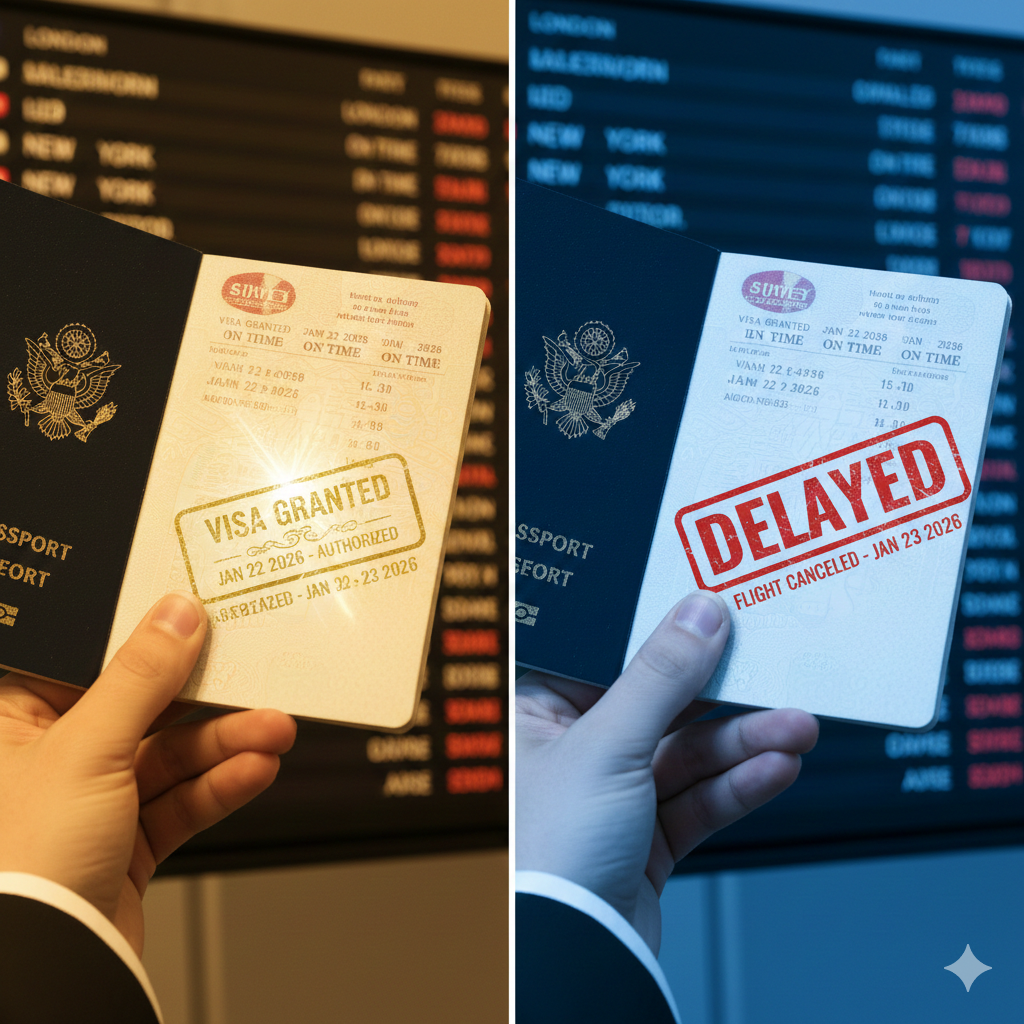
Common Reasons Job Visas Get Delayed (and How to Avoid Them in 2026)
Securing a job visa is often the final, critical step in launching an international career. However, what should be a straightforward administrative process can sometimes become a protracted, stressful ordeal. In 2026, with evolving immigration policies, digital system transitions, and post-pandemic backlogs still affecting many countries, understanding the pitfalls that cause delays is more crucial than ever. This guide breaks down the most common reasons for job visa delays and provides actionable strategies to navigate the process smoothly.
The High Cost of Delay: More Than Just a Wait
A delayed visa is not merely an inconvenience. It can lead to:
- Rescinded job offers from impatient employers.
- Significant financial losses from missed start dates.
- Strained relationships with your future employer.
- Personal stress and uncertainty.
By proactively addressing the common issues outlined below, you can significantly increase your chances of a timely approval.
1. Incomplete or Incorrect Application Forms
This is the number one cause of avoidable delays. Immigration authorities reject or place on hold applications with missing information, unsigned documents, or answers that don’t match supporting evidence.
How to Avoid It:
Use Official Sources: Only download application forms from the official government immigration website (e.g., USCIS.gov, GOV.UK, Homeaffairs.gov.au).
Read Instructions Meticulously: Every field and instruction matters. Use a guide or checklist.
Consistency is Key: Ensure your name, dates, and employer details are identical across your passport, application, and all supporting documents.
Digital vs. Physical: Pay close attention to formatting rules. Some forms must be typed, others handwritten in block letters. Incorrectly filled forms are often rejected outright.
2. Missing or Non-Compliant Supporting Documentation
Your application is only as strong as your documents. Submitting outdated, un-translated, or non-certified copies can trigger a Request for Evidence (RFE) or cause a direct refusal.
Critical Documents Checklist:
Passport: Must be valid for at least 6 months beyond your intended stay.
Job Offer & Labor Certification: The offer letter must meet all government criteria (salary, position, employer legitimacy). For countries like the USA, the approved PERM Labor Certification is vital.
Educational & Professional Credentials: Degrees, diplomas, and professional licenses. These often require official translations by a certified translator and educational credential assessments.
Proof of Relevant Experience: Detailed letters from past employers on company letterhead, stating your job title, precise dates, and key responsibilities that match the new role.
Financial Sustainment Proof: Bank statements, sponsorship letters, or employment contracts proving you can support yourself.
3. Background Check and Security Clearance Backlogs
All visa applications undergo security screening. Delays here are often unavoidable but can be prolonged by:
Common Names: If you share a name with someone on a watchlist, manual verification takes time.
Extensive Travel History: Multiple visas and visits to various countries lengthen the check.
Prior Legal Issues: Any history, even minor, must be fully disclosed and documented. Failure to disclose is a guaranteed path to denial.
Government Processing Times: In 2026, many embassies and immigration departments are still managing backlogs from previous years, especially for in-person interviews.
4. Employer-Related Issues
Your sponsor is under scrutiny. Delays occur if:
Employer Eligibility is Questioned: The company must be in good standing, able to pay the proffered wage, and registered with the relevant immigration authority (e.g., a USCIS-approved petition for a U.S. company).
Job Description Doesn’t Match Standard: The role must align with occupational codes and appear to be a genuine need.
Failed Labor Market Test (for some countries): Proof that no suitable local candidate could be found must be irrefutable.
5. Quota Caps and Priority Date Retrogression (Country-Specific)
For countries with visa quotas (notably the USA), delays are systemic.
H-1B Cap (USA): The annual lottery creates inherent delays for those not selected immediately.
Green Card Backlogs (USA): Applicants from countries with high demand (India, China, Philippines, Mexico) face wait times of years due to “priority date” retrogression.
Other Countries: The UK’s Skilled Worker visa, Canada’s Express Entry, and Australia’s skilled visas have invitation rounds where points thresholds and occupation lists change, affecting timing.
6. Medical Examination Problems
- Most long-term work visas require a medical exam by an approved panel physician.
- Incomplete Vaccination Records: Ensure you have your vaccination history.
- Communicable Diseases: Certain health conditions may require further treatment or evaluation before clearance.
- Using a Non-Authorized Physician: The exam must be performed by a doctor from the government’s approved list. Otherwise, it is invalid.
7. Administrative Processing (AP) or “Additional Screening”
Sometimes, after your interview, your case is placed in “Administrative Processing.” This is a broad category for additional checks. While opaque, it can be triggered by:
- Work in sensitive technology or scientific fields.
- Travel to certain regions.
- Random, in-depth review.
- AP can last from a few weeks to several months. There is little to do but wait, though you can periodically check the status.
8. Interview Mistakes and Inconsistencies
For visas requiring an interview, preparation is non-negotiable.
- Inconsistent Answers: Your verbal answers must match your written application.
- Lack of Knowledge About the Employer/Role: You must convincingly articulate your job duties and why you were hired.
- Unclear Intentions: You must convincingly argue you will return to your home country after a temporary visa expires (if applicable).
- Poor Documentation at Interview: Not bringing original documents and their copies to the interview.
Your Proactive Action Plan for a Smoother 2026 Visa Process
- Start Early: Begin gathering documents 4-6 months before your intended start date. Assume everything will take longer than expected.
- Create a Master File: Organize every document—originals, copies, translations, and certifications—in a secure, logical manner.
- Employer Partnership: Work closely with your employer’s immigration lawyer or HR department. They have done this before.
- Double-Check Everything: Have a detail-oriented friend or professional review your entire application packet.
- Prepare for the Interview: Practice answers about your job, employer, and qualifications. Be concise, confident, and honest.
- Use Official Tracking: Rely only on the official government portal for status updates, not third-party sites.
- Consult an Immigration Lawyer: For complex cases (sensitive work, prior issues, self-petitions), professional legal advice is a wise investment.
Frequently Asked Questions (FAQ)
Q: How long does a job visa typically take to process in 2026?
A: Processing times vary dramatically by country, visa type, and applicant nationality. In 2026, standard processing can range from 3 weeks (e.g., UK Skilled Worker priority service) to over 12 months (e.g., U.S. EB-3 green card for certain nationalities). Always check the official government website for the most current processing time estimates for your specific consulate or service center.
Q: Can I expedite my work visa application?
A: Some countries offer premium or expedited processing for an additional fee (e.g., UK’s Priority Visa service). In other cases, like the U.S., expedite requests (Form I-907) are granted only under strict criteria such as severe financial loss to a company or individual, humanitarian reasons, or compelling U.S. government interests. Your employer usually must initiate the request.
Q: What should I do if my visa is delayed beyond the expected timeframe?
A: First, check your application status online via the official portal. If it’s far outside posted processing times, you or your employer’s attorney can typically submit a formal inquiry or service request. Avoid contacting the embassy/consulate directly unless instructed. Never make travel plans or resign from your current job until the visa is physically in your passport.
Q: Does a request for evidence (RFE) mean my visa will be denied?
A: Not necessarily. An RFE is a chance to correct a deficiency. It means the officer needs more information to make a decision. Respond comprehensively and by the deadline, addressing each point raised. A well-handled RFE can still lead to approval.
Q: How can my employer help prevent delays?
A: Employers are crucial partners. They can prevent delays by: 1) Filing petitions accurately and early, 2) Ensuring the job offer and company financials are rock-solid, 3) Responding promptly to any queries from immigration authorities, and 4) Working with an experienced immigration attorney.
Conclusion: Control the Controllables
While some factors in the visa process are beyond your control, most delays stem from preventable errors in paperwork, documentation, and preparation. In 2026, with immigration pathways becoming more competitive and digital, meticulous attention to detail is your greatest asset. By starting early, organizing thoroughly, and understanding the common hurdles, you transform the visa journey from a source of anxiety into a managed, step-by-step process. Invest the time upfront to get it right—your future self, ready to start an exciting new chapter abroad, will thank you.
